
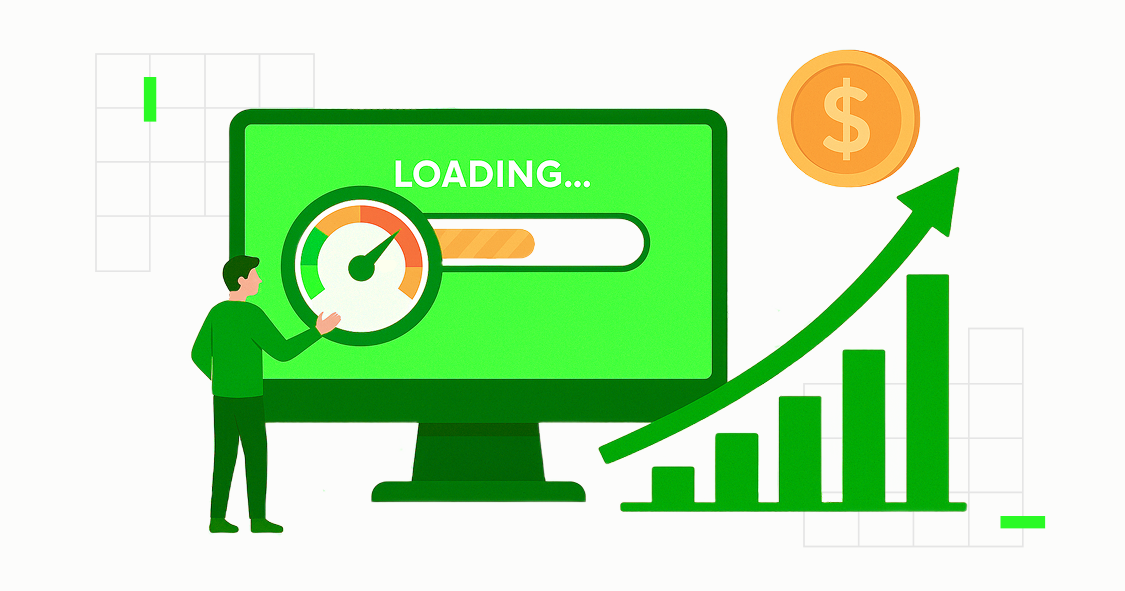
Today, the Internet lives in a “here and now” rhythm. Every moment that user spends waiting is a lost revenue, a broken lead, or a minimized tab. Pages that load slowly do not look attractive to the user, and website speed is important. Even the best content or the most sophisticated website design won’t save the day if the page is hanging in the loading process.
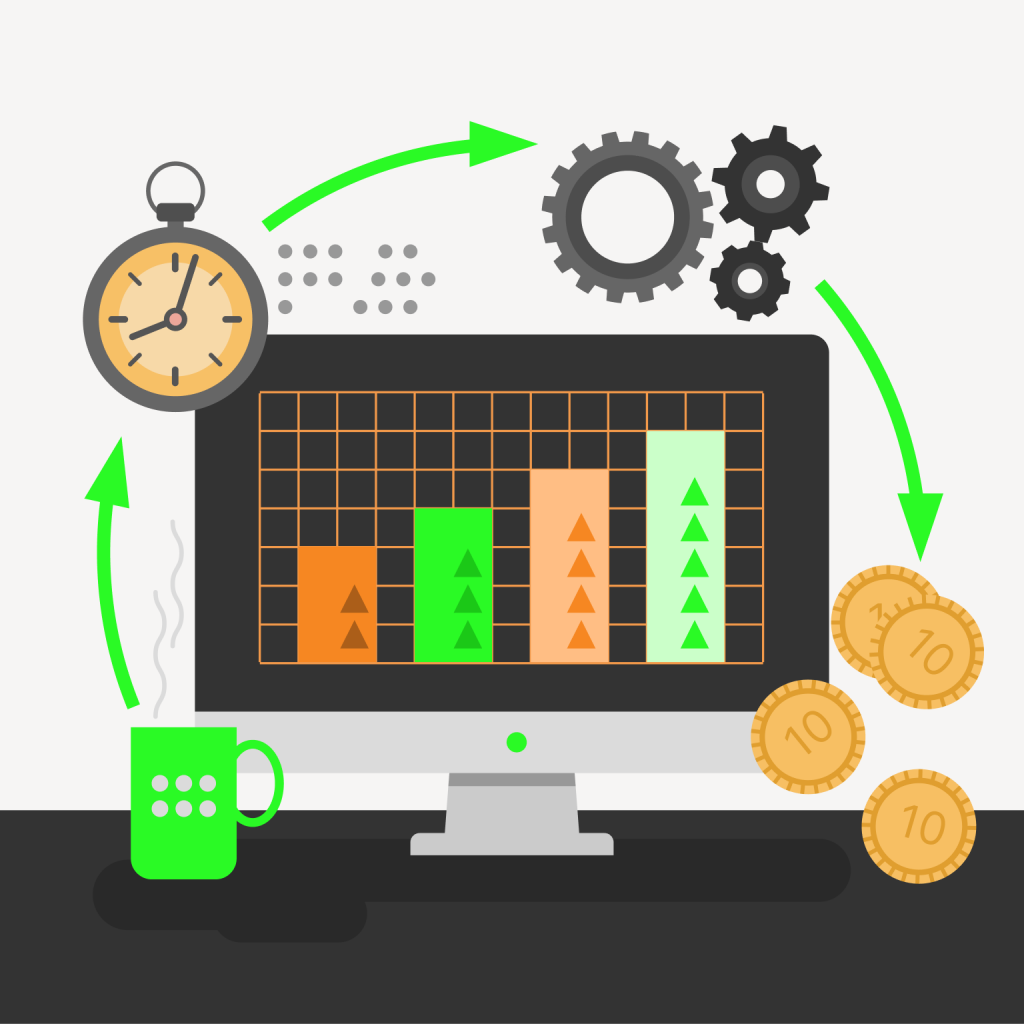
Here is simple business math:
A web page will be abandoned by 53% of visitors if it does not open in 3 seconds. This is not just a number, these are potential customers who will go to competitors forever. Google emphasizes that a website that loads in 1 second has a 200% higher conversion rate than one that takes 5 seconds. Now imagine: every additional second of delay reduces audience loyalty by 16% (Akamai data).
Why is it so critical? Website speed is the language of trust. The user subconsciously evaluates: if the site cannot load quickly, is it worth dealing with it at all? This is especially noticeable in mobile traffic: 70% of users admit that they will never return to slow websites.
What should you do in this situation? Optimization is not an expense, but an investment. From compressing images to choosing a powerful hosting service, every step towards speed is a step towards increased conversions. And if your website is still “thinking about it”, the following sections of the article will help you change this situation.
Website speed and conversions are directly related
In digital business, speed is a currency that can be converted into real money. Walmart’s research has shown that a 1-second reduction in loading time increases conversion by 2%. Does it sound insignificant? Now imagine the scale: for the giant, it meant an additional $1.6 billion in annual revenue. For a small business, a 5-10% increase from the same second can be the line between loss and profit.
Why exactly 1 second? Users do not divide patience into “a little” or “a lot”. Their brains work according to binary logic: fast = reliable, slow = risk. Even an aesthetic website design doesn’t compensate for the irritating wait. According to Deloitte, 79% of visitors who leave a website because it’s slow will never return. This is not the loss of traffic, it’s the loss of trust.
How it works for different types of websites:
- For highly competitive websites (e.g., online stores), a 2-second delay reduces conversion by 20-30%.
- Landing pages lose up to 70% of leads when loading longer than 4 seconds.
- Informational blogs: if a website does not load instantly, the user searches for answers on Google instead of your content.
Where to look for solutions? Professional web development is not only about creating features, but also about eliminating bottlenecks. Optimization of server requests, removal of unnecessary scripts, adaptation to mobile devices, each stage affects the final result. Remember: speed does not require a revolution. Sometimes it is enough to change hosting or compress images.
Web development and technical aspects of optimization

Building a fast website is like putting together a jigsaw puzzle: every technical element must fit perfectly. Web development is not only about writing code, but also about the art of eliminating the “heaviness” of the system. For example, high-quality code without unnecessary cycles and recursions reduces the time it takes to process requests by 20-30%. And image compression (even in WebP format) can cut up to 80% of the page weight, which is why 1 MB of “heavy” photos often becomes the main enemy of conversions.
Why is caching magic for users? Caching turns your website into an express train. When the browser saves a piece of data (CSS, JS, images), it doesn’t waste time reloading the same elements. The result: repeat visits become lightning fast, and the server load drops. But even here, there are nuances, incorrect TTL (cache lifetime) settings can freeze content updates.
Website design: when beauty becomes the enemy
Sophisticated animations, parallax effects, or 3D rendering are like a sports car powered by a tractor. They look good, but they eat up resources.
For example, CSS animation can increase the loading time by 1-2 seconds, and video on the main page — by 4-5 seconds. Even fonts: loading 5 different types from Google Fonts adds 300-400 ms to the total time.
How to find a balance:
- Prioritize functionality: animate only key elements (buttons, forms).
- Lazy loading: load “heavy” blocks only when scrolling.
- Test: tools like Lighthouse will show you which parts of your website design slow down performance.
Website speed for different types

Speed is not a universal standard, but an individual challenge for each type of website. An online store, a landing page, or a blog, each of them “lives” according to its own laws, and it is the developer’s responsibility to find a balance between functionality and performance.
- E-commerce: where every millisecond counts.
For online sales, a 1-second delay is like a hole in your pocket. Akamai research confirms this: 7% of customers abandon the cart for every second of waiting. Imagine: a customer has 3 seconds to change their mind, take a screenshot of the product, and move on to a competitor. Here, speed is not only a technique, but also a psychology: instant page loading creates the illusion of professionalism and control. - Landing pages: speed or death.
A landing page is a sprint. Its goal is to convince in 2-3 seconds. If it takes longer than 4 seconds to load, 70% of visitors will leave the page without even reading the headline. Unlike websites with multi-level navigation, a landing page should be as light as a feather: minimum scripts, maximum compressed images and cached elements. - Blogs: where speed is friends with content.
Blogs can afford to “relax” for 1-2 seconds, but no more. Why? Because users expect information, not interactivity. However, even here, optimization is important: if an article takes longer than 5 seconds to load, 40% of readers will simply scroll through their social media feeds to find similar content.
The choice of optimization strategy depends on the type of website. E-commerce requires a fanatical reduction in TTFB (time to first byte), landing pages need to minimize page size, and blogs need smart caching. But they are all united by one rule: speed is not a function, but a duty.
Website analysis: how we make your website lightning fast
At SELECTOR.SPACE, we don’t just measure speed, we build a system where every millisecond works for your profit. Our specialists use various tools for in-depth website analysis, turning technical data into a clear action plan. We don’t stop at numbers: we reveal why your TTI exceeds 3 seconds, how to reduce TBT by 40%, and what elements are eating up user resources.
What do we do?
- Diagnostics: we identify bottlenecks, from slow hosting to overloaded scripts.
- Optimization for your type of website: whether it’s an online store with thousands of products or a landing page with a video presentation, we know how to make it fast for your target audience.
- Implementation of turnkey solutions: we don’t just provide a report, but also set up caching, compress images, optimize the code, and monitor the result.
Our approach is technology + psychology. We understand that speed is not only a technical parameter, but also the user’s emotions. For example, if a website design with animations slows down loading, we don’t just remove the effects, but find alternatives that preserve the aesthetics but don’t “weigh down” the page.
Why choose us?
- Experience: we have many cases with different types of websites.
- Transparency guarantees: you get access to all reports and a detailed description of changes.
- Focus on your business: we don’t sell template solutions, we build speed according to your KPIs.
If your website takes longer than 3 seconds to load, you are already losing customers. But it can be fixed. Write to us at SELECTOR.SPACE, we will analyze your resource for free and offer an optimization plan with ROI calculation.
Tips for beginners: where to start
Website speed is the foundation you build with the first line of code. And if you’re just starting out, here are three steps that will save you from the mistakes 99% of beginners make.
- Hosting is not “just a place for files”.
Cheap shared hosting is like a chair with two legs: it will hold you somewhere, but it will let you down at a critical moment. Choose providers with TTFB (time to first byte) of less than 300 ms, SSDs, and HTTP/3 support. At SELECTOR.SPACE, we test hosting on real projects, and we know who will withstand the load during Black Friday and who will crash from 100 simultaneous visitors. - HTTP requests: less is better, correct is faster.
Every request is a risk. 50 requests per page? 49 of them can be optimized. Here’s how:- Combine CSS/JS files;
- Use SVG instead of PNG for icons;
- Enable lazy loading for below-the-scroll images.
At SELECTOR.SPACE, we automate this with our own scripts, you don’t have to manually “clean” each file.
- Test it, even if it seems like everything is perfect.
Is the site lightning fast on your iPhone 14? Check it on an old Android with 3G. Here’s why:- 34% of users are still accessing websites on devices released before 2020;
- Safari and Chrome interpret CSS animations differently;
- Font rendering in Firefox can add 0.5 seconds to FCP.
Our experts use tools to test on 2000+ combinations of devices and browsers.
A beginner makes a mistake not in the code but in priorities. Don’t try to catch all the birds with one stone. Start with hosting, then optimize queries, and then test.
Conclusion: website speed is an investment in the future
Website speed is not a technical “upgrade” but the currency of the digital era. It determines whether your content will be seen by Google, whether the site will withstand the influx of visitors during a promotion, and whether a customer will become a regular.
Do you want to increase the conversion rate on your website? Our specialists have extensive experience and understanding of all the important factors. Don’t hesitate to contact us, we will be happy to help you and provide advice. Find more interesting posts in our blog. You can contact our digital agency by phone at 066 389 02 24, 096 81 00 132, or by email at office@selector.space.
Follow us on Instagram, Facebook, TikTok, YouTube, and Pinterest.