
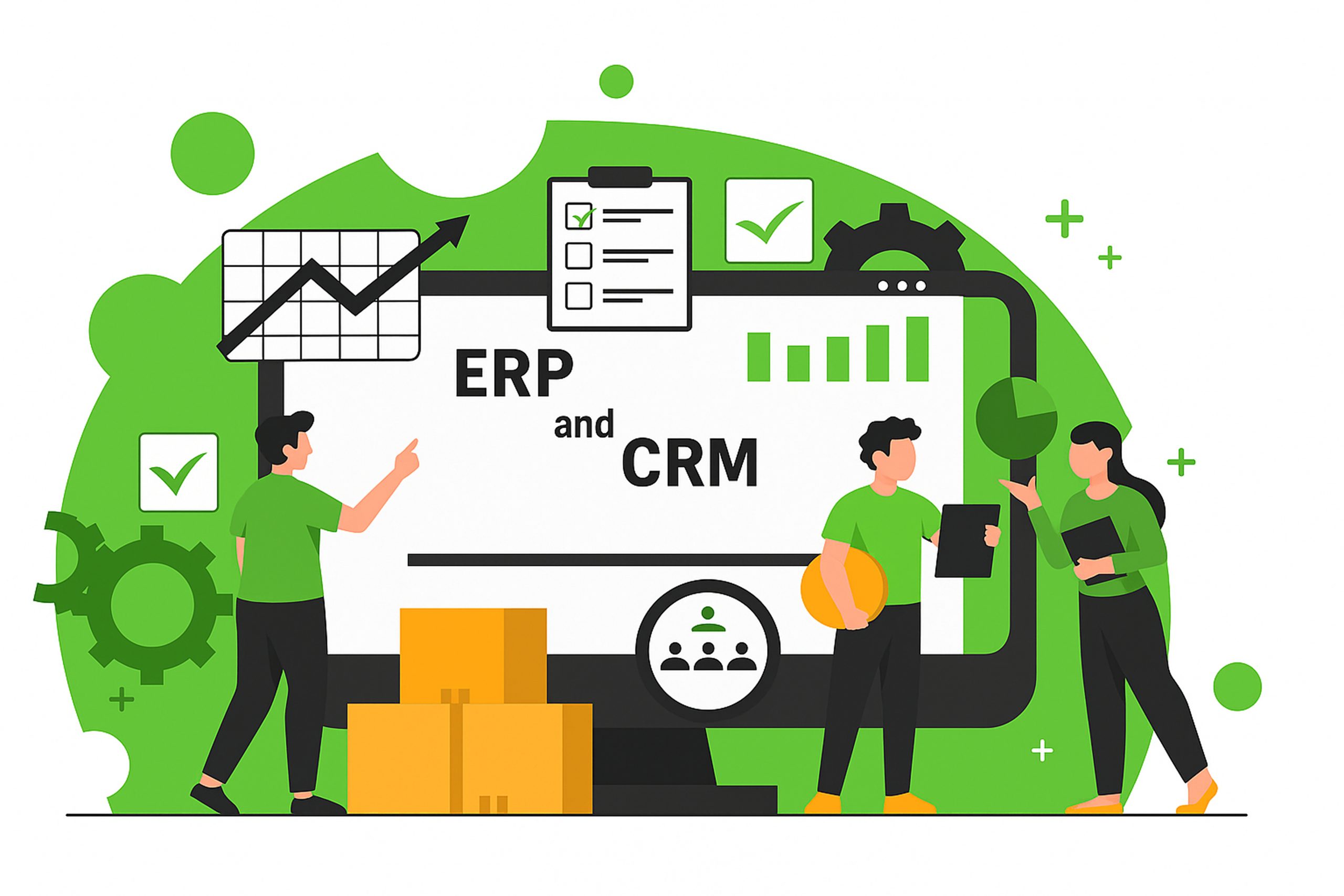
CRM focuses on customers (sales, marketing, service), while ERP integrates internal business processes (finance, warehouse, production, logistics, HR). The search for a worthy replacement for 1C begins with an analysis of critical functions (e.g., finance or logistics), followed by a review of solutions (Ukrainian: M.E.Doc, USO, IT-Enterprise; international: Odoo, ERPNext, SAP Business One, Microsoft Dynamics), choosing based on key criteria: mandatory support for current Ukrainian legislation, cost, scalability, and deployment type (cloud or local), since a successful transition requires a clear definition of needs and priority of compatibility with UA requirements.
Business in 2025 is a real endurance race. The winner is not just the one who runs fast, but the one who can do everything instantly. React to market changes, works with the watchmaker precision, and constantly adapt to new challenges.
Today’s customers demand not just quality, but instant response and absolute perfection at every stage of interaction. In such conditions, business process automation is no longer just a competitive advantage, it is a prerequisite for the survival and stable growth of any company. And when the strategic question of deciding the key tools for this automation arises, attention inevitably turns to two “pillars”: CRM and ERP systems. But here are the main questions: which system should you choose for your business? Should you decide only one, ignoring the potential of the other? Perhaps the real key to success and efficiency lies in their harmonious combination? We are SELECTOR.SPACE, and we will break these questions down into parts and analyze websites.
CRM: the driving force behind your sales and relationship building
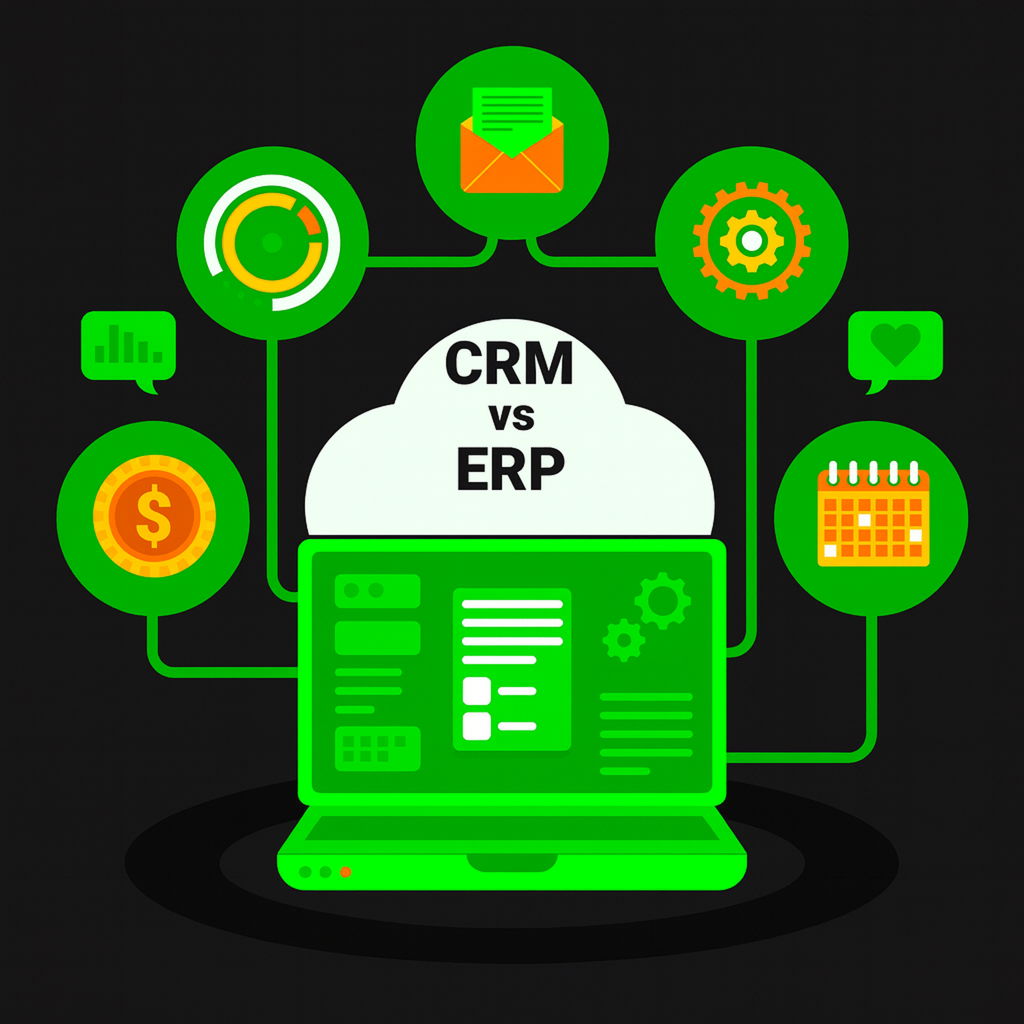
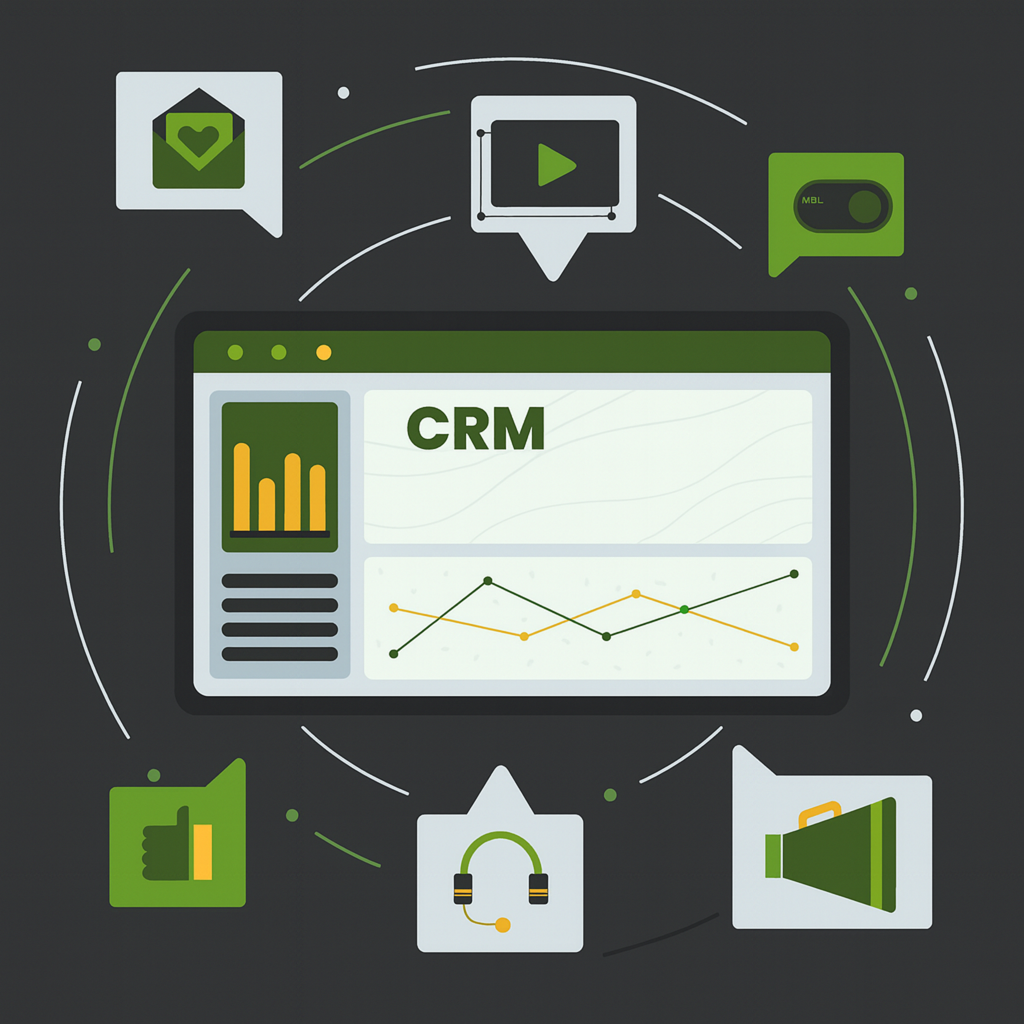
CRM (Customer Relationship Management). This is a concept that is sometimes perceived as quite vague due to the variety of functions in different systems. In fact, its essence is very specific and focused on one main goal. CRM systems are your central, key tool for automating and optimizing all interactions with your customer base, especially in sales. They are implemented on any corporate website. Of course, they can include several related processes, such as customer service (processing inquiries and requests) or even marketing (for example, audience segmentation for mailings, tracking campaign effectiveness), but their foundation, their center of gravity, is sales, the process of attracting and retaining customers to maximize their value.
Imagine a real-life situation: a customer shows interest. The CRM system instantly records this initial contact, creating a customer or potential lead card. Now you have a powerful tool for effective communication at all subsequent stages. The system helps to accompany the client throughout his entire journey. From the first “Hello!” of a potential customer through the stages of identifying needs, forming an offer, discussing terms, to the successful closing of the first deal.
And then, to subsequent sales (cross-sell, upsell), building loyalty, receiving feedback, and gradually increasing their LTV (Lifetime Value), which is a key indicator of marketing and sales success. The customer has started moving through your sales funnel, which is a comprehensive, managed process of building long-term, mutually beneficial relationships, not just registering contacts.
Why is CRM often referred to as a process system?
The power of CRM lies in the organization and automation of business processes such as the sales pipeline, the service request processing process, or even marketing campaigns. It does not “count” in an accounting or inventory sense (how much money is in the account, how many units of goods are left), it “guides” the customer and the deal through specific stages, monitoring task completion, reminders, and collecting important information for performance analytics.
Of course, when a successful sale finally takes place, CRM records the fact of payment, after all, this is the logical end point of the deal, an indicator of its successful completion. However, don’t expect CRM to fully replace your accounting or resource management system. It does not keep company balance sheets, calculate production costs, or calculate complex payroll accruals or equipment depreciation. Financial transactions here are more like informational tags or statuses: “invoice issued,” “payment received,” “contract amount X.” In-depth financial or property accounting is not its forte.
Similarly, CRM is not designed for real-time operational control of inventory levels in the warehouse or detailed management of staffing schedules and workloads of production department employees. Although it can see some of this data through integration with other systems (for example, inventory levels for generating quotes), its main mission is customers and processes directly related to sales and service. Managing financial, material, and human resources is the job of other specialized systems, namely ERP.
ERP: the nervous system of your business and accounting for every resource
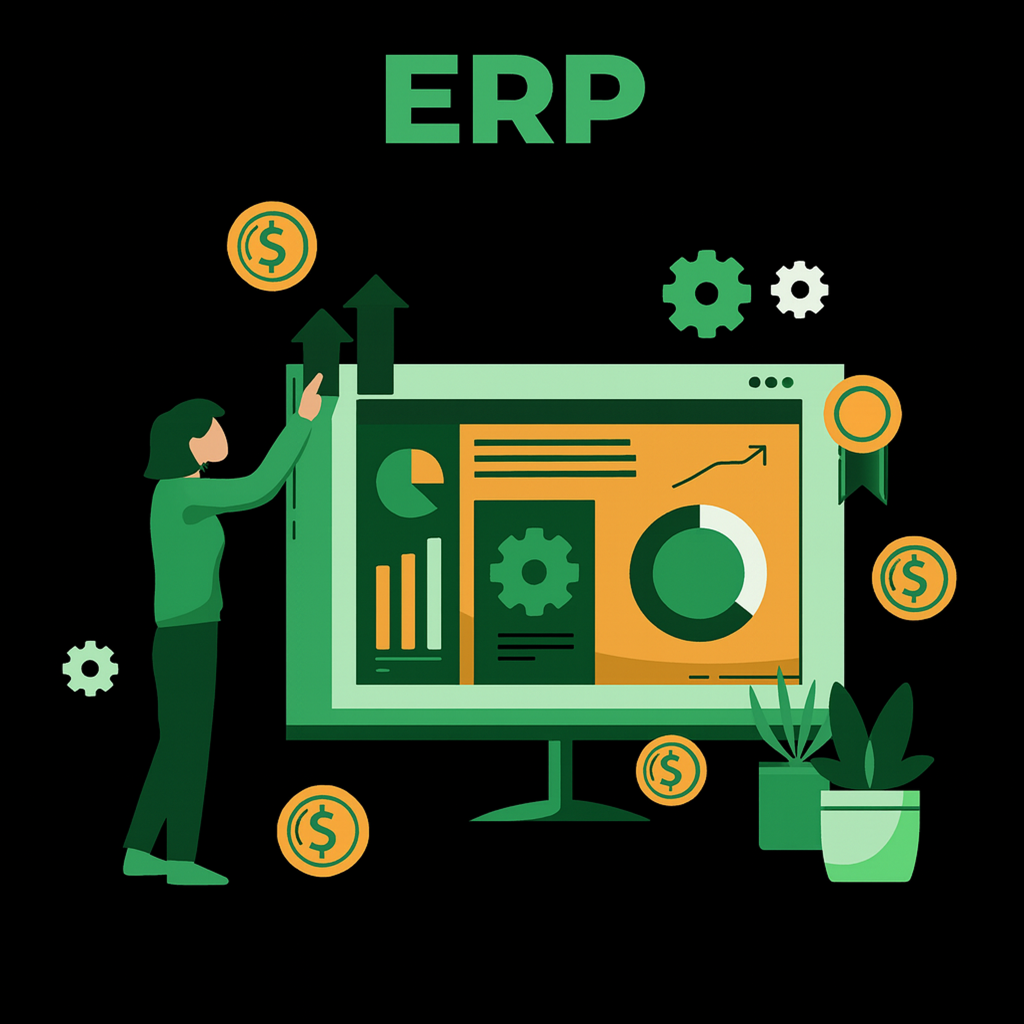
ERP (Enterprise Resource Planning). Interestingly, the word “accounting” is missing from the name itself, but historically, it is ERP systems that have become its powerful, comprehensive pillars in business. They are the real foundation, the “backbone” for centralized management of all key company resources. Cash (in accounts, in cash), raw materials and supplies, finished products (especially critical for manufacturing or wholesale and retail trade), human resources (staff, workload, expenses for individual entrepreneurs), machinery, equipment, everything that has value, requires control, and directly affects financial stability and operational efficiency.
How does it work in practice?

ERP is a true accounting system in the broad sense for any type of site. Each resource here has its own specific quantity, cost, characteristics, and location. Purchased a batch of raw materials from a supplier? The corresponding quantity and cost were automatically increased in the warehouse in the system. Finances reflected the expenditure of funds. Shipped goods to a customer based on a delivery note? The quantity of this product in the warehouse is instantly reduced, and the revenue appears in the accounting records. Closed the timesheet for the month? Recorded the time spent by each employee and automatically calculated salaries and related taxes.
Each such business transaction is necessarily formalized by a corresponding electronic document in the system, which is legal confirmation and changes the accounting figures. And then this detailed, accurate data forms the basis of all reports, financial, warehouse, and management. This is a fundamental difference from CRM. ERP manages the physical and financial movement of resources and keeps detailed records of them, forming a complete, verified picture of the current state and results of the entire business.
Business processes in ERP also exist. They are organized around the movement and accurate accounting of these same resources and finances. They provide control at every step.
CRM or ERP: a fictional dilemma of real business
“Without sales, there is no business!”, many would say, especially sales managers and marketers. And this is absolutely true. CRM, which effectively manages customer relationships, the sales funnel, and closing deals, appears to be a key, “profitable” part of the business. It directly provides cash flow, customer base growth, and market presence.
But can a business exist for a long time and be successful without absolutely clear, transparent accounting of all its assets and liabilities? Without constant control over how much money is actually in current accounts and in the cash register, what goods and in what quantities are in stock or in production, how much is spent on raw materials, energy, logistics, or salaries? Accounting (the same as ERP) is not just bureaucracy, it is the foundation of financial stability and strategic management. It provides the necessary transparency for owners and investors, allows you to control risks (e.g., cash gaps, theft, inefficient spending). It also allows you to make informed, data-driven decisions about pricing, investments, and development. Without it, even high sales can turn out to be a “pyramid” built on sand. When there is revenue but no real profit due to uncontrolled expenses or chaos in asset accounting.
Which is more important, CRM or ERP?
The real, pragmatic question is not which is more significant (sales or accounting), because both aspects are significant, but how to make these two critically significant systems work together synchronously and to their full potential. They are not separate, isolated “islands” of automation, but two closely related parts of a single healthy business organism. They must be perfectly synchronized through data exchange on any web pages:
- CRM is your customer-oriented “face” and “voice”: lead generation, sales management, marketing communications, service delivery, and loyalty building.
- ERP is your “back office,” the ‘heart’ and “brain” of operations that manage resources: accurate financial accounting (accounts receivable, accounts payable, budgets), inventory management (raw materials, finished products), production control, logistics, personnel and individual entrepreneur management, cost calculation.
ERP acts as a reliable, powerful back office for your CRM. When a CRM manager successfully closes a deal and records payment, ERP automatically takes care of all further “accounting”: it reflects the receipt of funds, writes off the sold goods from the warehouse (reservation, actual shipment), generates all necessary financial and primary documents (expense invoices, acts of work performed/services rendered, tax invoices, accounting entries). Together, they create powerful synergy, transforming the business from a set of disparate processes into a clearly defined, efficient mechanism with a single source of truthful information.
Looking for a worthy replacement for 1C?

Many Ukrainian companies are now consciously and actively looking for alternatives and moving away from the 1C platform. Why is this happening? There are several reasons, and they are entirely objective: many are looking for solutions that are more modern in terms of architecture and interface, more flexible in terms of configuration for individual, often rapidly changing business processes, and more convenient for users with different levels of training. In addition, an important factor is the search for solutions that better meet the specific challenges of the modern Ukrainian market and legislation, have high-quality localized support, and are developed in accordance with the needs of local businesses. Fortunately, such worthy, proven solutions in Ukraine not only exist but are actively being developed and implemented!
The ERP system “Vpravno” is a striking example of a Ukrainian development. It not only mechanically covers basic accounting and operational needs. It opens up new opportunities for business growth and optimization. A comprehensive, integrated platform for full automation of accounting, tax, and management accounting for almost any company. From small individual entrepreneurs or LLCs to large holdings with complex structures. Flexible settings, clear support for complex business processes, and convenient, reliable integration are its advantages.
How to use Vpravno?
Choose the most convenient format for you:
- Internet portal (SaaS): the ideal choice if you need to get started very quickly, without the hassle of purchasing and maintaining your own servers, complex installations, and updates. All this is taken care of by the service provider. The main advantage is access to your data and work from anywhere with an Internet connection, from any device. Payment is usually a subscription (monthly/annual), which is often more profitable for small and medium-sized businesses than large capital expenditures.
- Local version (“box”): a familiar and understandable option for those who have been working with 1C for a long time. For those who want to maintain complete control over all data and software on their own equipment. You purchase a license for the software product and install it on your servers or powerful workstations. This gives you maximum independence, but requires your own IT resources for support, backup, and system updates.
Vpravno capabilities: your business, your rules
From the outset, the Vpravno system was designed to adapt to change. Need special calculation logic for a unique indicator or a complex report that is not included in the standard set? Use the built-in low-code approach in Java. This allows you to create your own algorithms, reports, or even small modules without having to write code from scratch, significantly speeding up the adaptation process. Even users without in-depth programming knowledge can master basic modifications using visual tools. And if you have your own web developer, they can easily extend the functionality of the system for your unique business tasks by integrating specific calculations or connections to non-standard equipment/services through an open API.
Fully automated accounting: confidence and compliance with the law
- Chart of accounts: fully compliant with current Ukrainian legislation and NAS(S)A, automatically updated when changes occur. No need to “reinvent the wheel” or risk making mistakes.
- Automatic document generation: the system generates all key primary documents and accounting registers: invoices (TORG-12, custom form), acts of work performed/services provided, tax invoices (PN), invoices, cash orders, bank statements (through integration with client banks), as well as automatic accounting entries based on them. This saves the accountant a tremendous amount of time and minimizes the “human factor.”
- Full accounting for everyone: the system works effectively with any form of ownership and taxation: sole proprietorship (single tax, single tax with VAT), LLC (general system, simplified), as well as holding structures with many legal entities.
Familiar interface, new power: quick mastery
One of the fears when switching to a new system is long and painful staff training. “Skillfully” solves this problem. Its interface is designed to be intuitive and logical. In addition, it is structurally similar to the interfaces of familiar 1C solutions, but has a modern, more convenient design. Functions are clearly grouped by modules (finance, warehouse, personnel, procurement, sales) and user roles, which greatly facilitates the search for the necessary tools and the mastering of the system by users with different levels of experience with automated accounting systems.
“Vpravno” does not exist on an island: powerful integrations are the key to a complete circuit
The system is designed as an open platform for easy data exchange with other business-critical services:
- Client-bank: support for integration with more than 12 Ukrainian banks (PrivatBank, Oschadbank, Raiffeisen, Ukreximbank, etc.). Invoices issued in Vpravno are automatically sent to the client, and received payments are imported into the system, automatically closing accounts receivable. Account operations (viewing balances, statements) are available directly in the ERP interface.
- Electronic reporting (EZ): automatic creation and secure sending of all mandatory reports to the State Tax Service (tax returns, VAT registers), the Pension Fund, social insurance funds, and other authorities. Significantly less paper, manual work, and risk of technical errors when filling out forms.
- Third-party systems: easy integration using standard mechanisms (e.g., API) with other platforms used by the business. Your CRM system, MES (manufacturing execution systems), WMS (warehouse management systems), marketplaces (Prom.ua, Rozetka), electronic document management services (EDM), etc. Data is synchronized automatically.
- Open API: the availability of a technically documented application programming interface (API) allows your company’s technical team or partners to configure any specific data exchange you need with other internal or external services, expanding the functionality of Vpravo to infinity.
CRM + ERP “Vpravno”: the true power of synergy in action
It is the deep, technically implemented integration of your CRM with ERP “Vpravno” that gives the real, tangible effect that transforms two separate systems into a single digital space for your entire business. Here’s how it works on key processes:
- Reference data exchange (nomenclature synchronization): counterparties (customers, suppliers), goods/services (nomenclature), prices, warehouses, these critically important reference data are automatically synchronized between CRM and ERP. This ensures that the data is always up-to-date in both systems. The sales manager in CRM sees the actual stock balance (data from ERP) and correct prices. The accountant in Vpravno sees complete information about a new customer added by the manager in CRM.
- Document flow automation: a customer order, created and confirmed in CRM, is instantly transferred to Vpravo ERP. There, all the necessary documents for fulfilling the order are automatically generated based on it: an expense invoice (for releasing goods from the warehouse), an act of work performed/services provided, a tax invoice (if necessary), and accounting entries. The entire cyclical document flow takes place without human involvement in entering data from CRM into ERP.
- Payment recording (closing accounts receivable): the payment status for the transaction (partial, full, overdue), recorded in CRM (for example, after importing a bank statement or entering it by a cashier), is correctly and timely reflected in the ERP finance module “Vpravno,” automatically updating the status of the client’s accounts receivable.
The result of such integration? No more double data entry!
Sales, finance, warehouse, logistics, and production departments get access to a single source of up-to-date information. When everyone works with the same data, the results are immediately noticeable.
Automation frees employees from routine tasks, allowing them to focus on more important matters. Errors from manual data entry are virtually eliminated. Transactions are faster because information is instantly transferred between departments. Management receives accurate reports and can analyze sales, profitability, and inventory movement in real time. Instead of solving problems caused by inconsistent data, managers can focus on strategic planning.
Full automation
The Vpravno ERP system goes beyond simply replacing 1C. It is a modern tool created for Ukrainian companies that want to take their financial and operational accounting to the next level. The system is most effective when combined with a high-quality CRM system.
This combination creates a closed automated ecosystem for all critical company processes.
CRM deals with external processes: attracting customers through marketing, sales and deal management, customer service, and loyalty programs. Everything related to customer interaction and revenue generation.
ERP “Vpravno” ensures the smooth operation of internal processes: accurate resource accounting, cost and revenue control, cost calculation, automatic document generation, production and logistics management, payroll calculation. Everything you need for operational efficiency and financial stability.
Such integration not only gives businesses instant results in the form of increased efficiency and reduced costs, but also creates a solid foundation for future growth. Companies that choose integrated solutions such as Vpravno with CRM are investing in their competitiveness and preparing for the challenges of a dynamic market.
Would you like to order a website, CRM or ERP system configuration, or are you interested in SEO optimization? Our specialists have extensive experience and understanding of all the important factors. Contact us. We are the SELECTOR.SPACE team, and we will be happy to help you and provide advice. More interesting publications can be found on our blog. You can contact our digital agency by calling 066 389 02 24, 096 81 00 132 or by emailing office@selector.space.
You can also follow us on Instagram, Facebook, TikTok, YouTube, and Pinterest.