


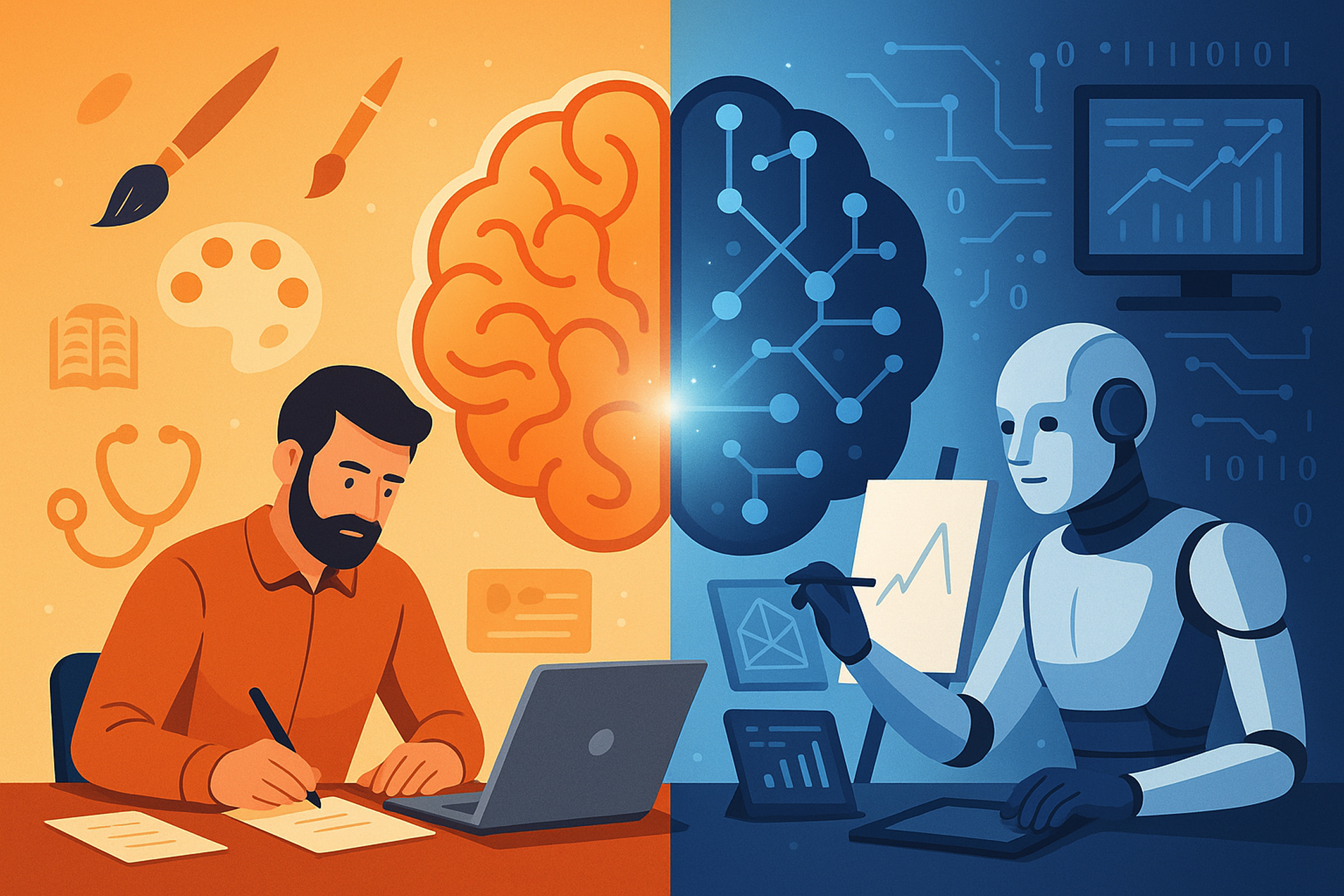
Today’s workers are increasingly concerned about the future of their professions in the age of artificial intelligence, and these concerns are well-founded. AI is already successfully replacing cashiers, call center operators, basic translators, and data entry workers, but professions that require emotional intelligence, creative thinking, or complex strategic planning remain safe. The smartest strategy for any professional is not to fight technology, but to learn to work with it, develop uniquely human skills, and continuously improve professional competencies.
Professions under scrutiny: who is at risk from AI?
Working with documents and data

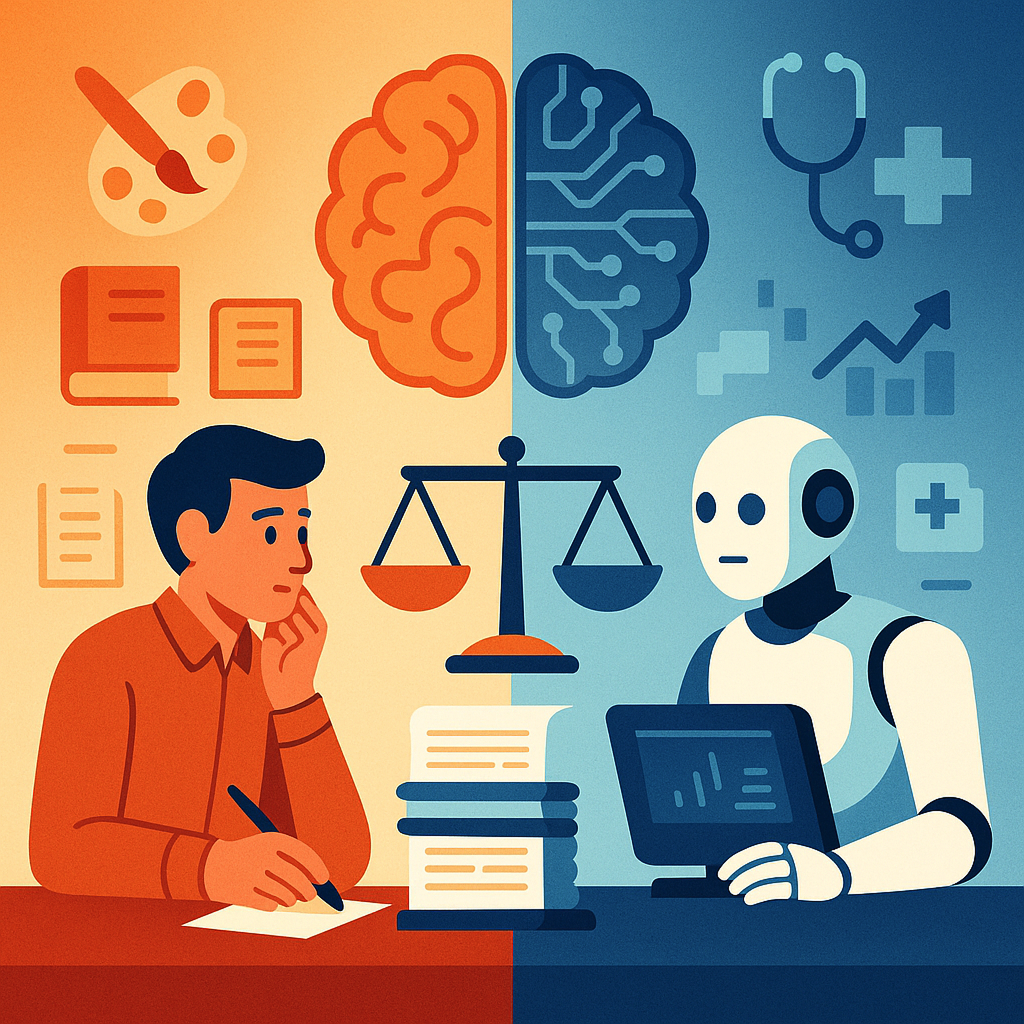
The first to come to mind are specialists whose work involves routine information processing. Imagine an accountant who enters hundreds of entries into spreadsheets every day. Or a lawyer who sifts through stacks of papers in search of the right clause. This is where AI comes into its own.
Banking analysts have already felt the power of automation. Today, systems analyze loan applications much faster than any specialist. They operate with dozens of parameters simultaneously and simply do not get tired after eight hours of work.
Does this mean the end for these professions? Hardly. The tasks themselves are changing. Instead of mechanically entering data, people are becoming analysts of the results produced by machines. They check, interpret, and make final decisions.
Transportation and logistics
All drivers will feel pressure from technology. However, this will not happen overnight. Most likely, autonomous transport will initially appear on simple routes, and only later will it learn to cover as many directions as possible.
There is no need to worry. As soon as some professions disappear, others will appear. Autonomous cars will still need maintenance. Therefore, we can say that technology does not take away jobs, it simply transforms them.
Industry
Factories have long since acquired robots as assistants. They perform complex and monotonous tasks. But time marches on, and now they are responsible not only for assembly, but also for quality control, for example. In the ideal world of today, artificial intelligence is already capable of adapting to different types of products, as well as learning from its mistakes. In industry, humans remain indispensable where incredible precision, a creative approach to work, or non-standard solutions are required.
AI and creative professions
- Design.
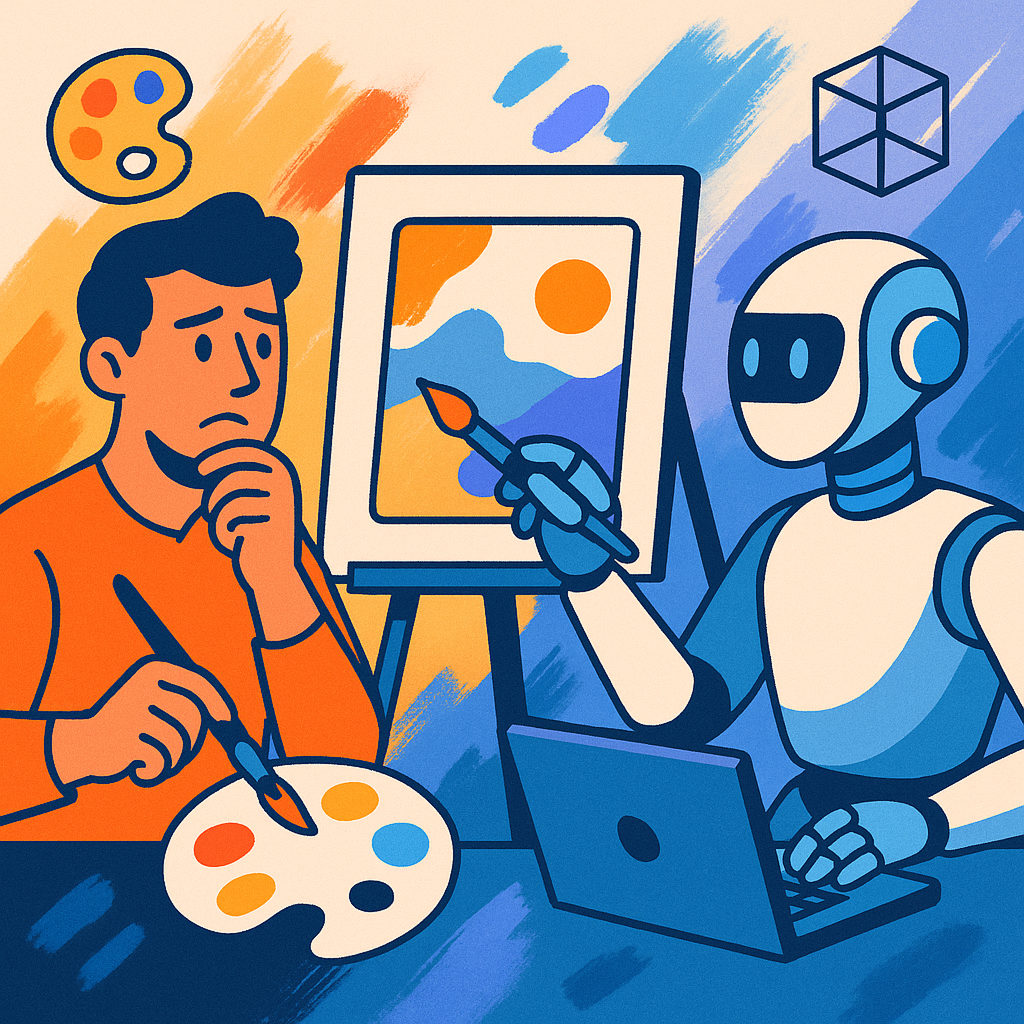
Designers have felt intense pressure from technology. Today, customers think: why pay a specialist when you can generate everything yourself? There is one very important nuance in all this: web design is not just a pretty picture, it is also consumer psychology. Designers communicate with clients, learn about their needs and goals, think about conversion, follow trends, and so on. This is much more complicated than simply generating images. - Copywriting.
Those who work with text are also under pressure. A neural network can easily write informational text, but it can’t handle large volumes of text that evoke emotions. After all, humans have been writing books for centuries.
IT and AI: the paradoxes of automation
Programming and development
A modern website is not just a bunch of code, but also a clear analysis of requirements, planning of the site architecture, testing, and support. AI is now greatly accelerating some processes, but it will not be able to replace the developer’s thinking.
Web development is constantly moving forward and evolving. In today’s world, instead of writing long code themselves, programmers use AI. Although it is a powerful tool, the final decision remains with the human.
The variety of websites is growing every day. The requirements for them are becoming increasingly stringent. The process of creating a website is becoming more complex due to numerous integrations with various systems and the need to ensure security, performance, and scalability.
SEO and digital marketing
Search engine optimization is another area that is already being influenced by AI. Google actively uses machine learning to rank results. Algorithms are becoming increasingly complex, making it more difficult to predict their behavior.
Modern SEO is no longer just about selecting keywords and buying links. Today, website promotion takes dozens of factors into account: loading speed, user experience, content quality, behavioral signals.
AI makes website analysis much more in-depth. Systems can detect hidden patterns in user behavior, predict trends, and optimize content for specific queries. But who will interpret all this data? Who will make strategic decisions?
Website promotion is gradually becoming a more analytical activity. Specialists work with huge amounts of data, look for insights, and build long-term strategies. Digital agencies are adapting to the new realities, perceiving AI not as a competitor, but as a powerful assistant.
New opportunities in professions
Every technological revolution has not only destroyed old professions, but also created new ones. With the advent of computers, calculators disappeared, but programmers appeared. The Internet “buried” many traditional media, but created an entire digital content industry.
AI management and analytics
Someone has to train neural networks, monitor their performance, and interpret the results. Professions such as prompt engineer (a specialist in creating queries for AI), AI trainer, and machine learning analyst are emerging.
These specialists are becoming a kind of bridge between humans and machines. They understand how algorithms work and know how to use their potential to solve real business problems.
Ethics and security
The more powerful AI becomes, the more questions arise about the ethics of its use. Who is responsible if an autonomous vehicle causes an accident? How can data privacy be protected during machine learning?
New professions are emerging, such as AI ethicists, algorithm security specialists, and neural network auditors. These people ensure that technology develops in the right direction.
The human factor
Paradoxically, the development of AI only increases the value of purely human qualities. Empathy, creativity, and the ability to think outside the box are becoming even more important.
Psychologists, coaches, and HR specialists are in high demand. After all, in a world dominated by automation, people need genuine human communication more than ever.
AI adaptation strategies: how to stay in the game
Lifelong learning
The key to success in the age of AI is continuous learning. It is no longer possible to get a degree and work comfortably in the same way for the next 30 years. The world is changing too fast.
Successful professionals are already combining different skills. Designers are learning the basics of programming, marketers are mastering data analytics, and journalists are learning the intricacies of SEO.
Developing soft skills
Machines are quick to learn how to perform technical tasks, but they struggle with communication, leadership, and creative thinking. It is precisely these abilities that are worth investing in.
Learn how to present ideas, manage teams, and resolve conflicts. These skills will remain relevant regardless of what technologies emerge.
Working with AI
Instead of viewing technology as a threat, learn how to use it. For example, SEO optimization is now based on a symbiosis of human understanding and machine power. Website promotion becomes much more effective when a specialist understands the capabilities of AI and knows how to apply them.
If you plan to order a website today, you probably expect the contractor to use the latest tools. But remember that a website is not just a set of technologies. It is, first and foremost, a solution to business tasks, and human experience is indispensable here.
Reality versus hype
Limitations of modern AI
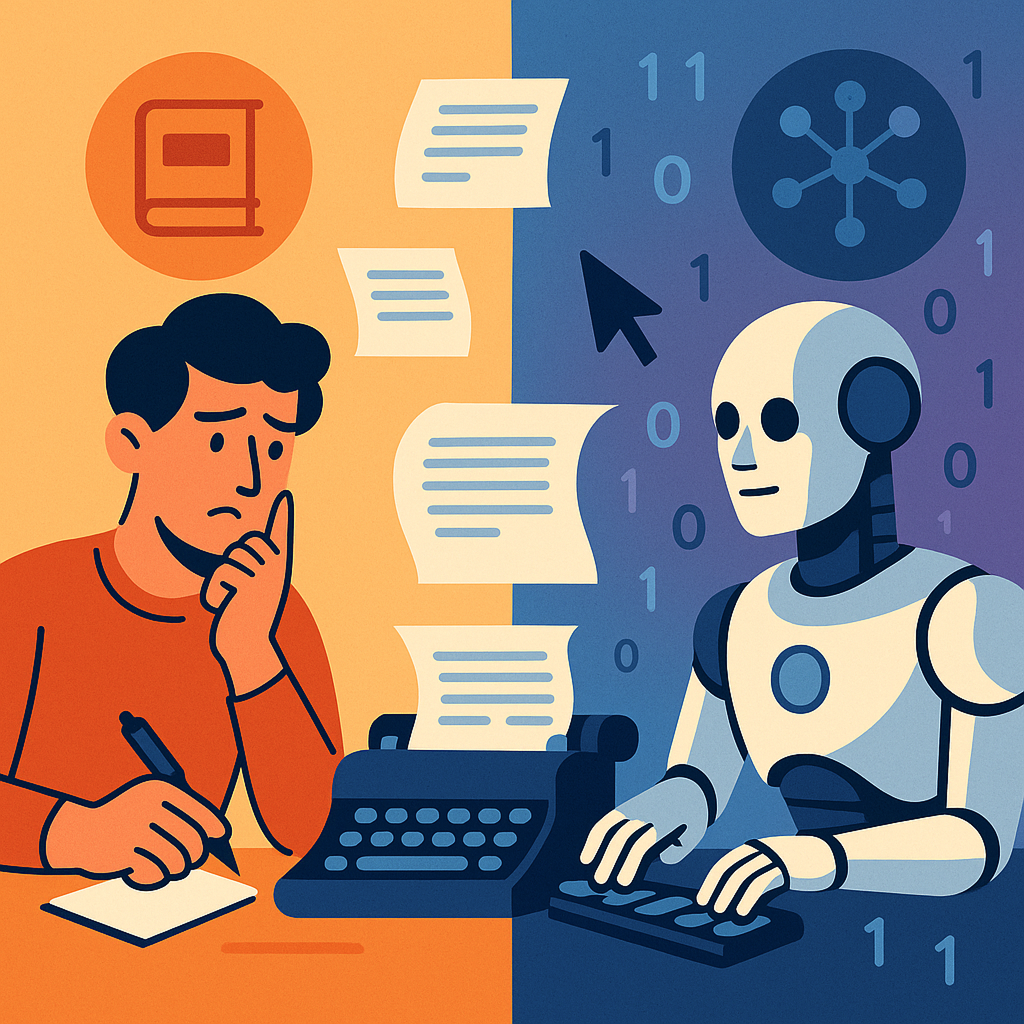
Although AI has achieved many successes, it has serious limitations. Modern systems do not understand context the way humans do. They can give incorrect answers, and they are not capable of creating with emotion.
A web page created by AI may look great, but will it work well? Will this page generate revenue for the business, attract new customers, and reflect the spirit of the brand?
Website design is not just about aesthetics. It is a combination of many factors, such as psychology, marketing, and so on. Good website design requires a very subtle understanding of users, the market, and the goals that a particular business is pursuing.
Time of transition
Technologies are introduced gradually. First, they replace the simplest tasks, then spread to more complex ones. This process takes years, sometimes decades.
In most professions, people will have time to adapt. The main thing is not to ignore the changes, but to start preparing for them now.
The future with AI: human-machine collaboration
The most likely scenario is not the complete replacement of humans by machines, but the creation of hybrid work processes. AI takes care of the routine, while humans focus on creativity and strategic thinking.
Specific examples of transformation
Medicine: from diagnosis to personalization
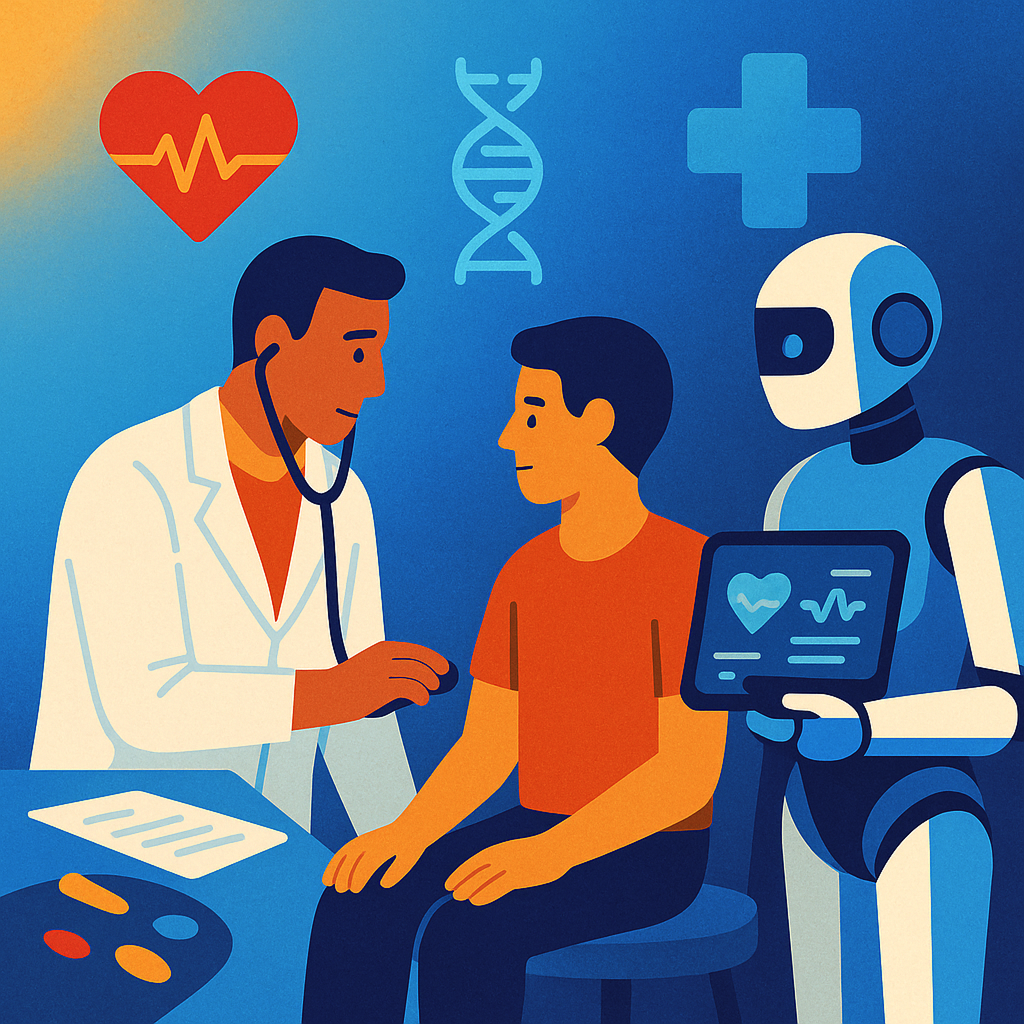
Artificial intelligence is showing incredible results in medicine. The analysis system can now detect cancer in its early stages more accurately than an experienced radiologist or oncologist. Does this mean that doctors are already being replaced by AI?
No. Rather, doctors have gained a powerful diagnostic tool. AI helps, but the final decision will still be made by the doctor, as they are the ones who take into account all the patient’s characteristics, medical history, etc.
A machine can analyze thousands of medical studies and suggest a treatment option. But who will explain a complex diagnosis to the patient? Who will support them and show compassion in difficult times?
Education: an individual approach to each student
The field of education is undergoing major changes at the moment. Learning platforms analyze how students absorb material and then begin to adjust the complexity of a particular task. The system is able to identify any gaps in knowledge and suggest an excellent learning program.
This is all well and good, but can a machine replace the inspiration and motivation that a teacher provides? Education is not only about transferring knowledge, but also about shaping personality, developing critical thinking, and social skills.
Modern teachers are gradually becoming coordinators of the learning process. They use AI to analyze student performance, but at the same time they motivate, inspire, and guide each student individually.
Finance: trust in the age of algorithms
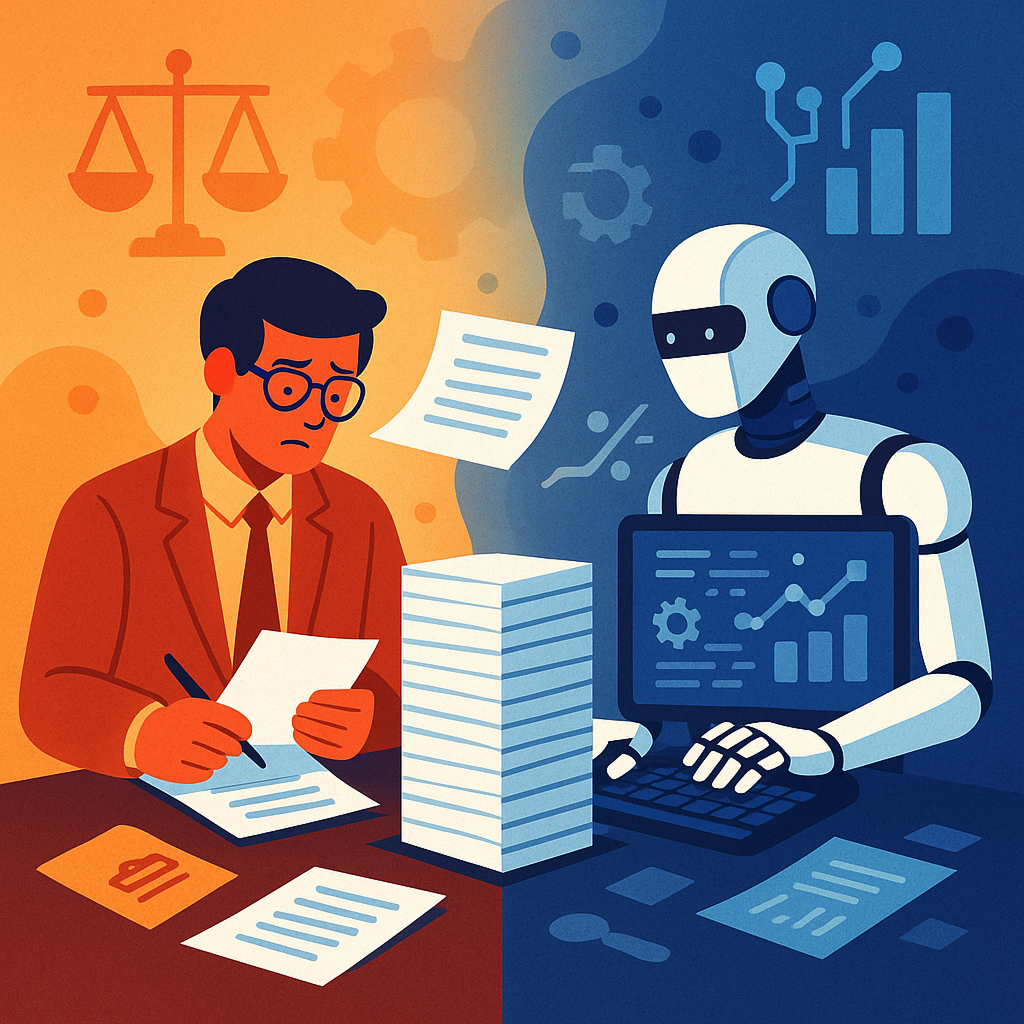
Banks are increasingly implementing artificial intelligence into their systems. It assesses credit risks, detects fraudulent activity, and automates trading.
But it is important to remember that money is, above all, a matter of trust. People entrust their finances not to machines, but to specific professionals. Bankers will certainly use AI for analysis in the future, but they will continue to build relationships with their clients personally.
Psychological aspects of adapting to AI
- Overcoming fear of the unknown.
People fear AI because this threat affects not only blue-collar professions, but also creative ones, which have always been considered exclusively human. Fear is natural, but it should not paralyze us. Technology always creates new opportunities faster than it destroys old ones. Keep this in mind. - Changing our mindset: from competition to cooperation with AI.
The biggest mistake is made by those who perceive AI as a competitor. The most successful professionals will be those who learn to see it as a partner. - New skills for a new reality.
The ability to ask questions, think critically, and develop emotional intelligence. These are the skills that will really matter in the age of AI.
What should you do with AI right now?
- Don’t panic.
- Start experimenting with AI in your field.
- Develop skills that are difficult to automate: critical thinking, communication, leadership.
- Be prepared to learn throughout your life. The world is changing, and we must change with it.
Artificial intelligence is not the enemy of humanity. It is just a tool that can make our work much more interesting and productive. The main thing is to learn how to use it, not to fear its emergence.
Ultimately, the future belongs to those who can combine human wisdom with machine power. This new generation of professionals will create solutions that we can only dream of today.
Want to order a website? Our specialists have extensive experience and understanding of all the important factors. Contact us. We are the SELECTOR team. SPACE, we are happy to help you and provide consultation. More interesting publications can be found on our blog. You can contact our digital agency by calling 066 389 02 24, 096 81 00 132 or by emailing office@selector.space.
Also, follow us on Instagram, Facebook, TikTok, YouTube, and Pinterest.